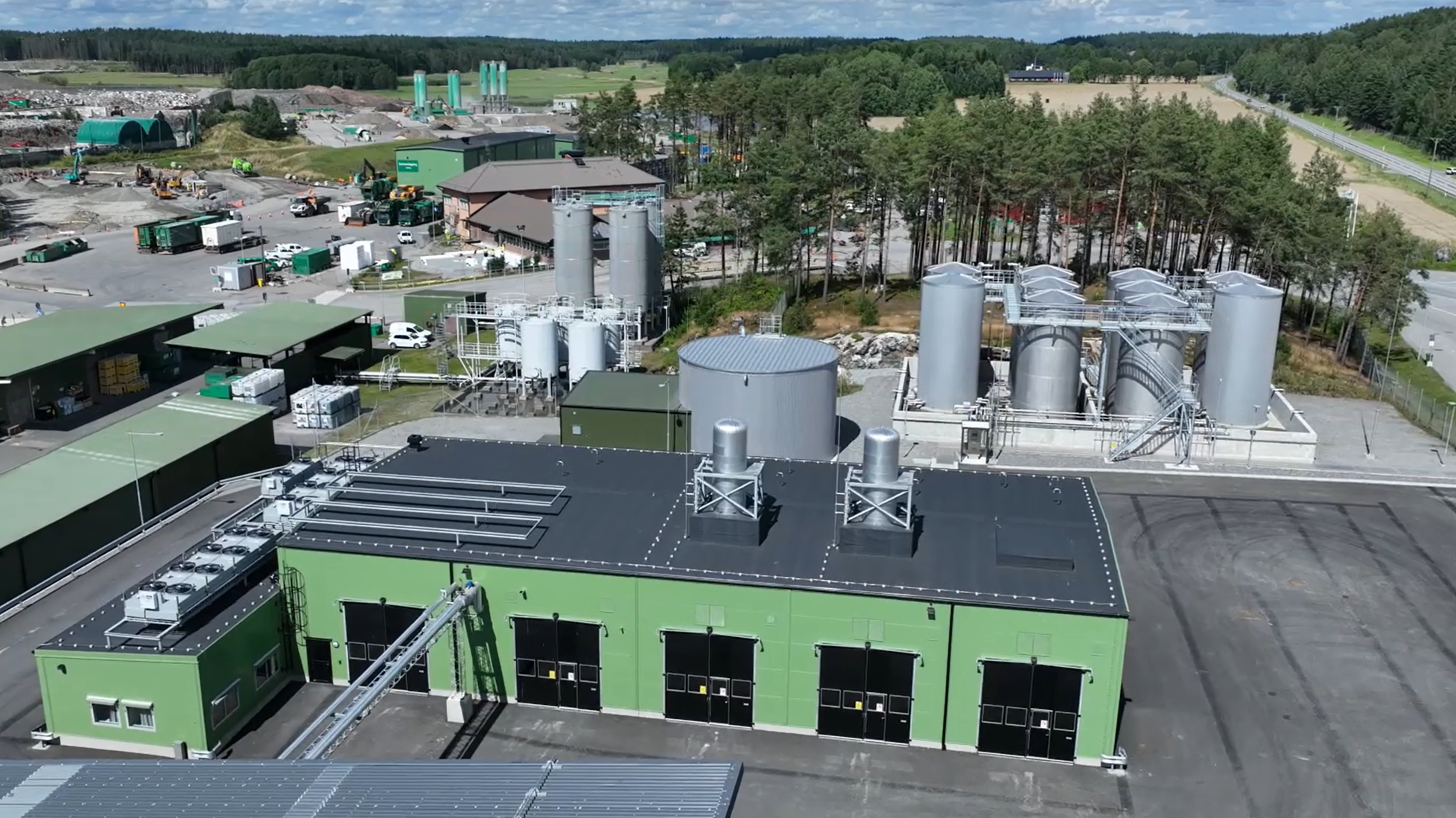
The SRS facility, which opened in Sweden in September 2025, can process up to 20,000 tonnes of used solvents each year. The solvents, including acetone, ethanol, methanol, and glycol, are purified using an advanced form of traditional distillation technology, after which they can be used in products like cleaning agents, disinfectants, and washer fluid.
– The interest in our products has been enormous. This comes both from a climate perspective, as companies seek to source more sustainable solvents, and from a resilience perspective, as they want to avoid dependence on fossil raw materials and long global supply chains, says Erik.
The recycled solvents maintain the same quality as traditional fossil-based products, but with up to 81% lower climate impact depending on the solvent. The climate benefit has been confirmed by global climate organisation Exponential Roadmap Initiative (ERI). To encourage the development of low-emission alternatives to high- emission products, the ERI has launched the Climate Solutions Framework, which sets out criteria for climate solutions. In 2025, SRS became the third product to be r ecognised as a climate solution under this framework.
– Having our climate benefits confirmed by such a reputable third party is hugely important, both to us and to our customers. Going forward, our focus will be on stabilising production with a view to expansion. With the technical solution, value chain, and demand already in place, nothing is stopping us from scaling up, says Lars.
This article is based on content from the Ragn-Sells Group Sustainability Report 2025. Learn more about our sustainability work in the full report.