Stop treating recycled raw materials as a problem
Sweden and Europe need more metals and minerals. They are essential for industry, the climate transition and our resilience in increasingly uncertain times. At the same time, large quantities of valuable raw materials are right in front of us, in what we today call waste, writes Ragn-Sells' Chief Strategy Officer and R&D Director Anders Kihl.
06 Nov 2026The problem is that our regulations still make it more difficult to use them.
I recently took part in the Royal Swedish Academy of Engineering Sciences (IVA) seminar Strategic metals: what is needed for Sweden to deliver? The question was how Sweden can increase access to the strategic metals our industry needs. IVA brought together representatives from the mining, steel and recycling industries to discuss what is preventing increased supply, focusing on areas including permitting, investment and the market for recycled materials.
My answer is quite simple: We need a new perspective on waste and resources, and we need to create a level playing field for virgin and recycled raw materials.
Today, only around seven per cent of the global economy is based on recycled raw materials. All the while, the extraction of virgin resources continues to increase. This is not sustainable. If we are to manage the climate transition while also strengthening our resilience, significantly more of the materials already present in society need to be brought back into production.
This is not primarily a waste problem. It is a resource problem.
We are working at the wrong end of the system
EU waste legislation is based on the waste hierarchy. First, we should prevent waste, then reuse and recycle materials, and only as a last resort send them to landfill.
That sounds sensible. The problem is that the hierarchy almost completely lacks a quality perspective.
The fact that a material is formally "recycled" does not automatically mean that it replaces a virgin raw material. In the worst case, we can meet our material recycling targets without reducing the extraction of natural resources at all.
This is where the system goes wrong.
The goal should not be to recycle as much as possible at any cost. The goal should be to create safe, high-quality raw materials that can actually replace materials we would otherwise have to extract or import.
One concrete example is bottom ash from waste incineration. Ragn-Sells separates metals from the ash. After sorting, a finer fraction remains that can still contain valuable metals.
The technology to extract more of those metals exists.
But the process also leaves behind a fine-grained material that is unsuitable for construction and therefore needs to be landfilled. This is where landfill tax comes into play. The result is that extracting more metal from the material can become economically disadvantageous, even though the alternative is to continue extracting virgin raw materials.
In practice, we are therefore taxing parts of the process of recovering a resource that is already present in society.
It is difficult to see the logic in that.
Europe imports raw materials that are already here
The same fundamental problem applies to phosphorus. Europe is highly dependent on imports of phosphate raw materials. At the same time, large quantities of phosphorus are present in sewage sludge. When the sludge is incinerated, the phosphorus is concentrated in the ash. With modern technology, it is possible to recover phosphorus from this raw material and produce new, clean products.
This is exactly what Ragn-Sells, through its innovation company EasyMining, is now building a facility to do in Germany. But here too, technological development collides with regulation. Current EU rules prevent waste-based raw materials from being used to manufacture feed phosphates, regardless of the quality of the final product.
This is particularly strange because high-quality phosphate raw material is something Europe continues to import in significant quantities from Russia.
In other words, we have the technology to recover a critical resource from a European raw material, but the regulatory framework still focuses on the history of the raw material rather than the quality of the product we can produce.
That is exactly the logic we need to change.
The same market requires the same rules
Virgin and recycled raw materials are not two separate worlds. They compete in the same market and are used to manufacture the same products. We will need both.
That is why policymakers need to stop treating recycled materials solely as waste that needs to be managed and instead start viewing them as potential raw materials.
This does not mean lowering standards. Quite the contrary. We need clear and rigorous requirements for quality and safety.
The rules though must be based on what a material contains and the quality of the recycled raw material, not simply on whether the material was once classified as waste.
Sweden and Europe need more strategic raw materials. Some will have to come from mines. However, a growing share can and must come from the enormous material flows that already exist in our society.
In many cases, the technology already exists.
Now policymakers must make it possible to use it.
Create a level playing field for virgin and recycled raw materials. Let quality determine how a resource is used, not its history.
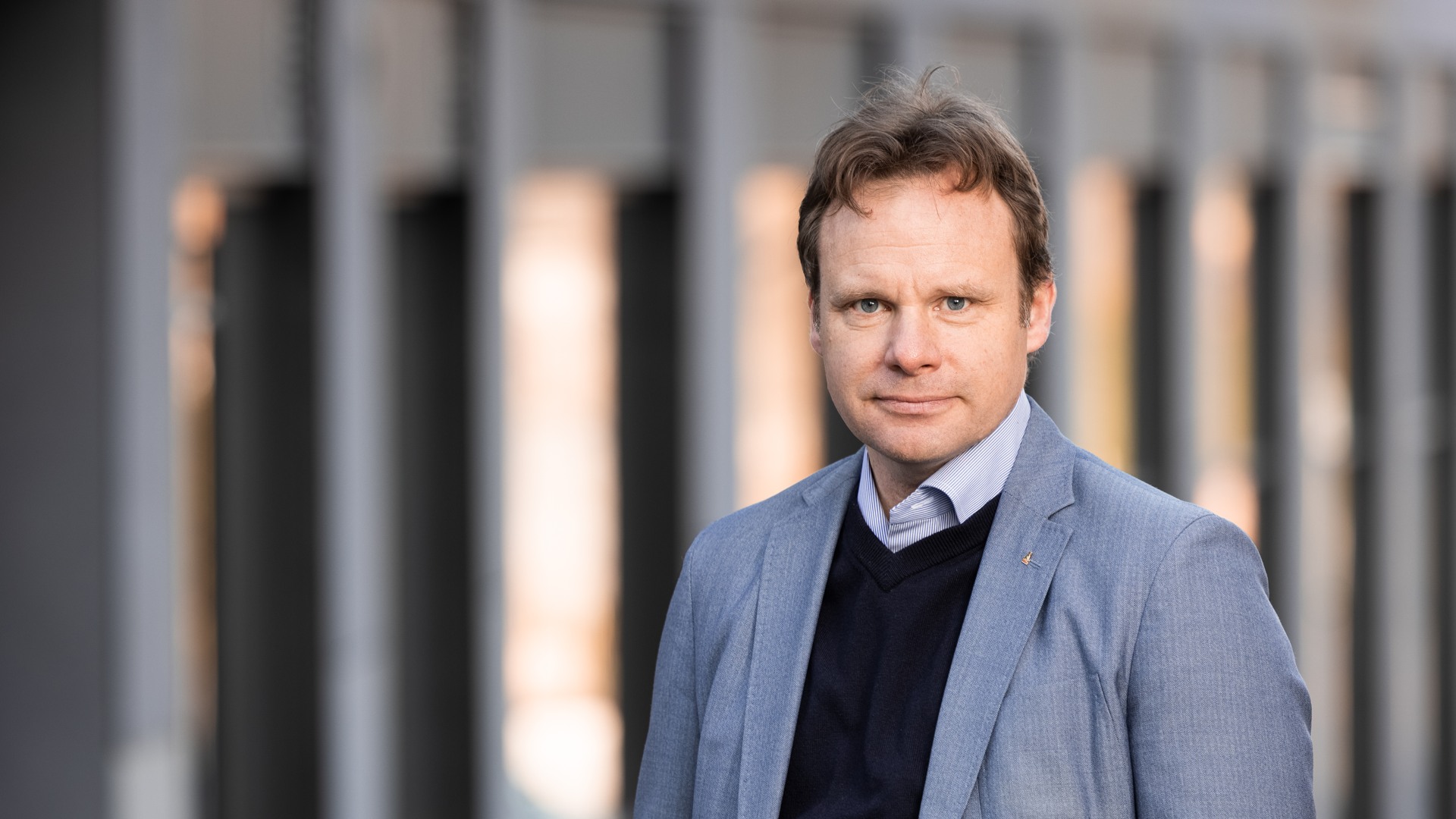
Anders Kihl, Head of Strategy and Research at Ragn-Sells and member of the Royal Swedish Academy of Engineering Sciences (IVA), Division V.