Poultry of the future fed Swedish insect meal from Ragn-Sells
Three years of Swedish trials have shown that insect meal, mycoprotein, and mussel meal can help replace soy and fishmeal in feed for fish, chickens, pigs and laying hens – with lower environmental impacts. Led by Axfoundation and the Swedish University of Agricultural Sciences (SLU), more than 25 partners including Ragn-Sells tested the entire value chain in practice, from regional protein production and industrial feed manufacturing to animal farming and sales. The results point to significant potential for wider use, but scaling up requires investment, long-term purchasing commitments and clearer, risk-based regulations.
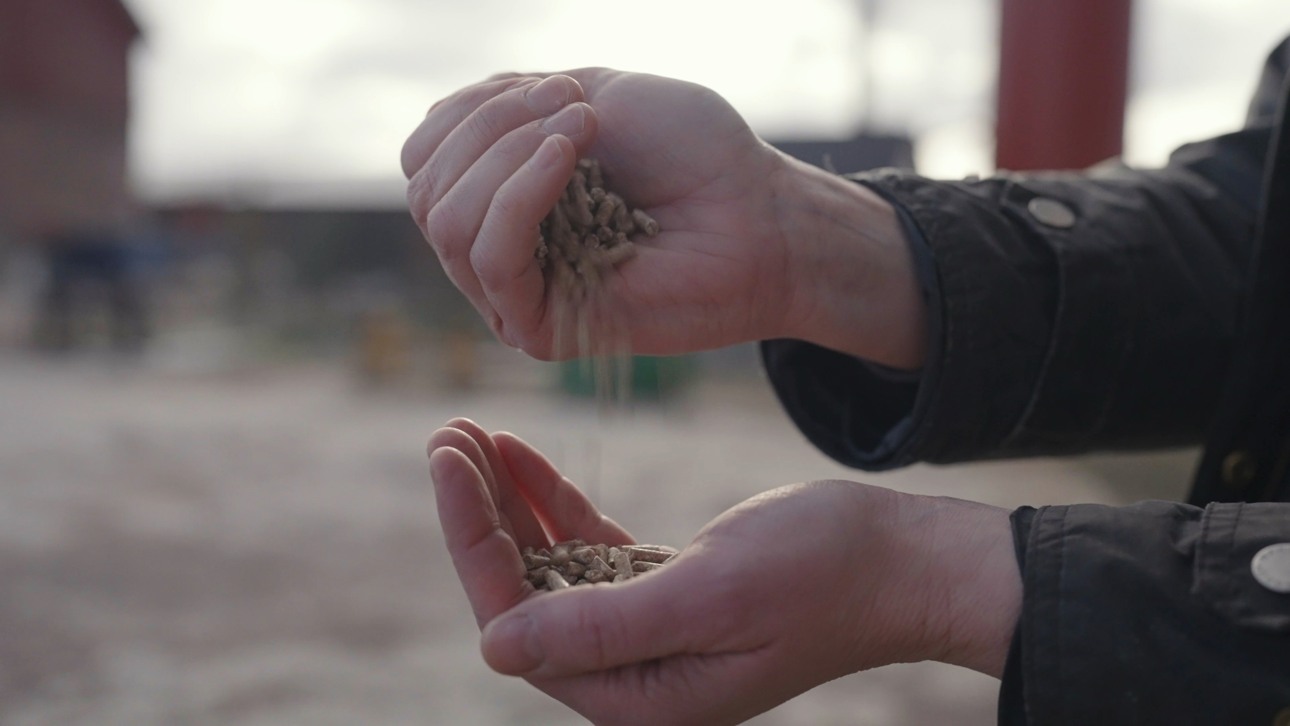
04 Nov 2026Ragn-Sells has been responsible for producing and developing the insect meal, which is made from black soldier fly larvae reared on plant-based residual streams from the Swedish food industry. The initiative is a concrete example of how residual resources can be transformed into valuable new products within a circular economy.
“The black soldier fly is particularly interesting because it can consume a wide variety of low-value residual streams that are not used for feed and convert them into high-value protein and fat. Our pilot facility demonstrates the potential for industrial-scale production,” says Audinisa Fadhila, Plant Manager Black Soldier Fly Orsa at Ragn-Sells.
Poultry production is the largest consumer of soy feed in Sweden. Today, around half of the world’s and Sweden’s agricultural land is used for livestock production and feed cultivation. Swedish poultry production alone requires 24,000 hectares of land outside Sweden for soy cultivation, an area larger than the municipality of Malmö.
At the same time, large volumes of residual resources from Swedish forests, seas, and the food industry are not being used efficiently. Through the project, researchers, feed producers, and food companies are collaborating to develop circular protein ingredients such as insect meal, fungal protein, and cultivated mussels, ingredients that require only a fraction of the land and inputs needed for soy production.
“Today's feed system relies heavily on imported raw materials and consumes vast amounts of land and marine resources. At the same time, valuable nutrients from our forests, seas and food industry remain underused. It makes little sense to waste these resources when we can turn them into feed with real environmental benefits. We've shown that it works in practice. Now businesses and policymakers need to create the conditions for these solutions to grow," says Madeleine Linins Mörner, Program Director, Future Food, Axfoundation.
The project developed soy- and fishmeal-free feeds using and insect meal (from Ragn-Sells), mycoprotein, mussel meal made with residual streams. Researchers at SLU evaluated the nutritional properties of the feed ingredients and animal performance, including protein and amino acid digestibility studies in pigs and broiler chickens.
Laying hens maintained egg production while fish and pigs achieved growth comparable to reference animals. Broiler chickens grew more slowly, in a trial affected by pilot-production limitations and simultaneous changes in the feed supply chain. Fish, chicken, pork and eggs from the trials were sold or served in Sweden.
Life cycle assessments showed that the project feeds reduced land use by 7–40 percent across all four animal categories compared with reference feed formulations, per kilogram of feed. Climate impact was lower for the fish, chicken and laying hen feeds, while eutrophication potential was lower for the fish, chicken and pig feeds. The findings demonstrate that circular feed ingredients can reduce environmental pressures by making better use of existing resources and reducing reliance on conventional protein sources.
Read more about the project in the Axfoundation press release.
Background
The Feed of the Future for Fish, Pigs, Poultry and Laying Hens (2023–2026) aimed to develop and test circular feed ingredients that improve resource efficiency, reduce the environmental impact of animal feed and strengthen food system resilience. Led by Axfoundation and SLU, the project brought together organizations from research, protein production, feed manufacturing, agriculture, aquaculture, retail and foodservice. It received partial funding from Vinnova, Sweden's innovation agency. Partners include: Axfoundation, SLU, Axfood, Boden Municipality, Cirkulär, Dapibuset, DC Farmers, Ecopelag EF, Ecoloop, Fiskhallen Sorunda, Grönsakshallen Sorunda, Hemköp, Kötthallen Sorunda, Lantmännen, Martin & Servera, NovaPro, Plant Protein Production, Ragn-Sells, School of Hospitality, Culinary Arts and Meal Science at Örebro University, RISE, Seaqure Labs, Stjärnägg, Svenska Foder, Urban Deli, Varva, Vattenfall, Viking Fågel and Älvdalslax.
Source: Axfoundation and SLU, The Feed of the Future for Fish, Pigs, Poultry and Laying Hens – Turning Circular Novel Feed Ingredients into Viable Value Chains, Final Report, 2026. Scale-up figures are modeled scenarios, not forecasts. Life Cycle Assessment of Future Feed, Louise Bartek and Theodoros Vasileiou, KTH Royal Institute of Technology, Stockholm.
More information is available at www.framtidensfoder.se.